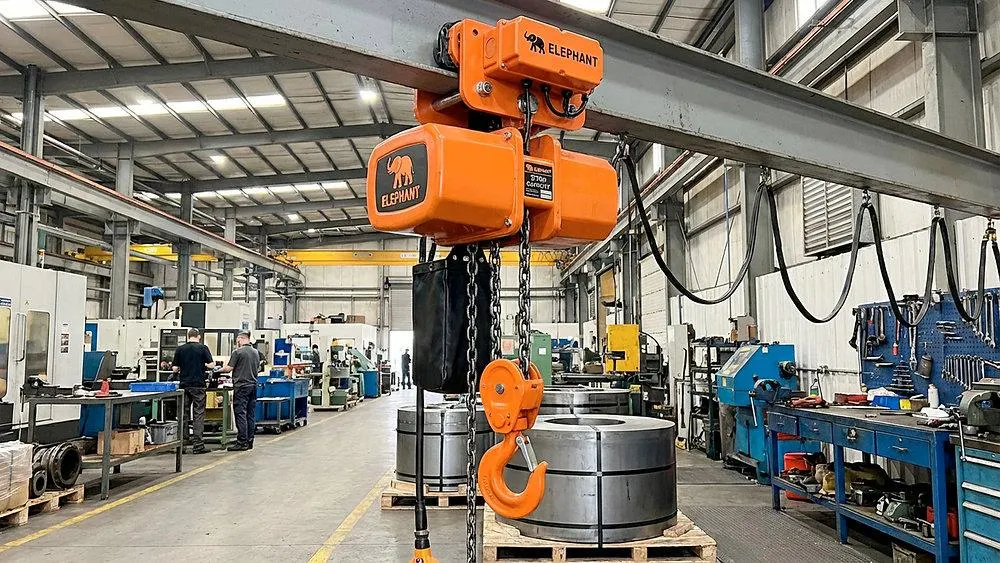
Industries that handle heavy materials need lifting solutions that are safe, reliable, and efficient. This is where an electric chain hoist has become an essential part of modern material-handling operations. From manufacturing plants and warehouses to construction sites and workshops, these hoists help lift, lower, and position heavy loads with greater control and less manual effort.
As businesses across the UAE continue to focus on productivity, workplace safety, and efficient material handling, the demand for dependable lifting equipment is growing. But what makes electric chain hoists so popular compared with traditional lifting methods?
In this guide, we explore the major advantages of electric chain hoists, their industrial applications, safety features, and factors businesses should consider when selecting the right equipment.
What Is an Electric Chain Hoist?
An electric chain hoist is a powered lifting device designed to raise and lower heavy loads using an electric motor and load chain. Unlike manual chain blocks, electric models reduce the physical effort required from operators and provide faster, more controlled lifting.
A typical electric chain hoist consists of several key components, including:
- Electric motor
- Load chain
- Chain container
- Chain sprocket
- Hook assembly
- Gear mechanism
- Brake system
- Pendant or remote control
Depending on the model and application, electric chain hoists are available with different lifting capacities, lifting speeds, and control configurations.
Why Are Electric Chain Hoists Popular in Industry?
1. Faster and More Efficient Lifting
One of the biggest reasons industries choose electric chain hoists is their ability to lift loads efficiently. Manual lifting equipment requires considerable physical effort and can take longer when materials need to be moved repeatedly.
An electric chain hoist uses motor-driven operation, allowing operators to lift and lower loads with minimal physical exertion. This can help improve workflow, particularly in applications involving frequent lifting cycles.
2. Reduced Manual Handling
Heavy manual handling can increase physical strain and create unnecessary workplace risks. Electric hoists reduce the amount of force operators need to apply when moving heavy materials.
With a simple control mechanism, operators can raise, lower, and position loads without manually pulling a chain. This makes electric chain hoists particularly useful for repetitive material-handling operations.
3. Improved Load Control
Precision is important when positioning machinery, components, fabricated structures, and other heavy materials.
Electric chain hoists provide controlled movement, making it easier to position loads accurately. This can be particularly beneficial in manufacturing, maintenance, assembly, and workshop environments where small positioning errors can cause damage or delays.
4. Strong Safety Features
Modern lifting equipment is designed with safety as a major consideration. Electric chain hoists can incorporate features such as mechanical brakes, overload protection, emergency stop controls, limit switches, and robust hooks.
However, safety depends on more than equipment design. Operators should follow the manufacturer's instructions, stay within the rated working load limit, inspect equipment regularly, and ensure appropriate training is provided.
5. Suitable for Repetitive Industrial Applications
Electric chain hoists are well suited to environments where loads must be lifted and lowered frequently.
They are commonly used in:
1.Manufacturing facilities
2.Warehouses
3.Workshops
4.Construction projects
5.Automotive facilities
6.Maintenance operations
7.Fabrication plants
8.Assembly lines
9.Industrial plants
Their powered operation makes them practical for repetitive lifting tasks that would otherwise require significant manual effort.
Electric Chain Hoists vs. Manual Chain Blocks
Both electric chain hoists and manual chain blocks have applications in material handling, but they serve different operational requirements.
Manual chain blocks rely on operator effort to raise a load, while electric chain hoists use a motor. For occasional lifting and locations without electrical power, manual equipment may be suitable.
For frequent lifting operations, an electric chain hoist can provide greater speed, convenience, and consistency.
The right choice ultimately depends on factors such as load capacity, lifting frequency, operating environment, available power, and required lifting speed.
Applications of Electric Chain Hoists in the UAE
Across the UAE, industries such as construction, manufacturing, logistics, fabrication, and maintenance rely on lifting equipment to handle heavy components and materials.
Electric chain hoists can be used for tasks such as the following:
1.Moving machinery during installation 2.Handling components in manufacturing facilities 3.Loading and positioning fabricated parts 4.Maintenance and repair operations 5.Lifting equipment in workshops 6.Material handling in warehouses 7.Supporting assembly and production processes
Their relatively compact design also makes them useful where workspace is limited and efficient overhead lifting is required.
What Makes a Good Electric Chain Hoist?
Choosing the right hoist requires more than simply selecting the highest lifting capacity. Businesses should evaluate the equipment according to the actual application.
Important considerations include:
Lifting Capacity
Determine the maximum weight that needs to be lifted and select equipment with an appropriate rated capacity. Never exceed the manufacturer's specified working load limit.
Lifting Height
The required lifting height determines the appropriate chain length and configuration. Selecting the correct lifting height can improve operational efficiency and prevent unnecessary chain handling.
Lifting Speed
For high-frequency operations, lifting speed can have a significant effect on productivity. Consider how quickly loads need to be raised and lowered during normal operations.
Duty Cycle
The frequency and duration of lifting operations should match the hoist's intended duty classification. Heavy-duty industrial applications may require equipment designed for more frequent operating cycles.
Operating Environment
Temperature, dust, humidity, chemicals, and other environmental conditions can affect equipment performance. The hoist should be suitable for the environment where it will operate.
Safety and Maintenance
Look for appropriate braking systems, overload protection, limit devices, and other safety features. Regular inspections and preventive maintenance are also essential for reliable operation.
Why Quality Matters When Choosing Lifting Equipment
A lifting device is responsible for handling potentially heavy and valuable loads, so equipment quality should never be treated as a secondary consideration.
Poorly selected or improperly maintained lifting equipment can lead to equipment damage, operational downtime, and serious safety risks. Businesses should therefore work with experienced lifting-equipment suppliers that can help assess the application and recommend suitable equipment based on capacity, duty requirements, operating conditions, and relevant safety considerations.
Final Thoughts
The popularity of the electric chain hoist comes down to a combination of efficiency, controlled lifting, reduced manual effort, versatility, and practical industrial performance. For businesses that regularly handle heavy materials, the right lifting equipment can improve workflow while supporting safer and more productive operations.
If you are looking for reliable lifting solutions for industrial, warehouse, construction, or maintenance applications in the UAE, Apex Lifting can help you identify equipment suited to your operational requirements. Evaluate your lifting capacity, duty cycle, lifting height, and working environment before selecting your hoist, and always prioritize proper installation, inspection, and operator training.
Frequently Asked Questions
1. What is an electric chain hoist used for?
An electric chain hoist is used to lift, lower, and position heavy loads with the help of an electric motor. It is commonly used in manufacturing, warehouses, workshops, construction, maintenance, and fabrication applications.
2. Are electric chain hoists better than manual hoists?
Electric chain hoists can be more efficient for frequent lifting because they reduce manual effort and generally provide faster, more controlled operation. Manual hoists can still be suitable for occasional lifting or applications where electrical power is unavailable.
3. How do I choose the right electric chain hoist?
Consider the required lifting capacity, lifting height, lifting speed, duty cycle, operating environment, available power supply, and required safety features. The hoist should always be appropriately rated for the intended load and application.
4. How can electric chain hoists improve workplace efficiency?
They reduce manual effort, provide consistent lifting performance, and allow operators to move heavy loads with greater control. This can help reduce handling time and improve productivity in repetitive lifting operations.